
Safety glass for construction machinery
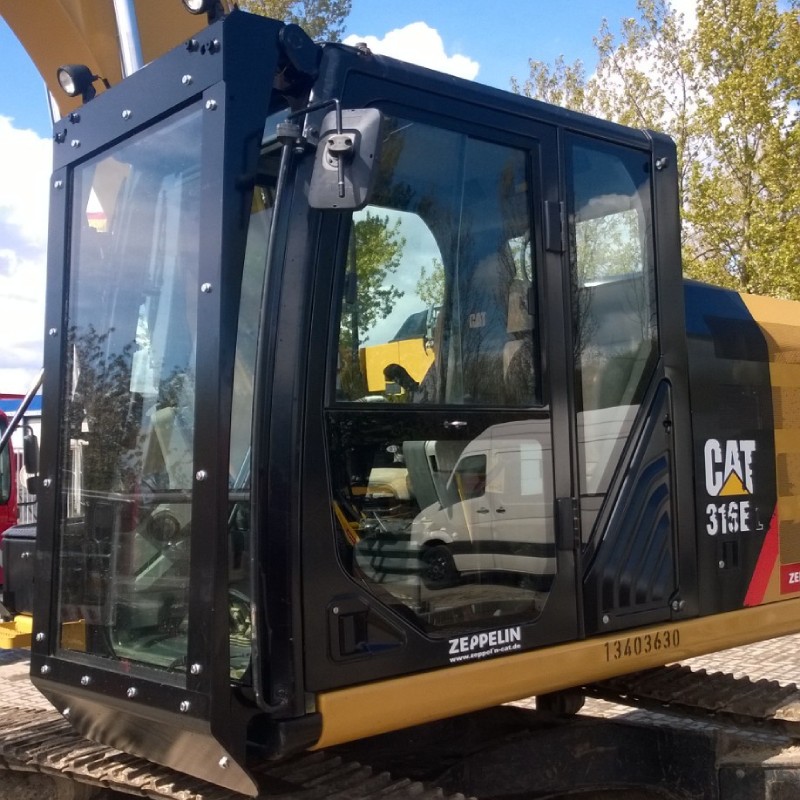
Today, the glazing of construction machinery has to do much more than just keep out the wind and weather. It is a core component of occupational safety.
ECHLE – Your Partner for Protective Glazing
Minimum standards are good, but custom requirements are our strength. We provide solutions for all types of applications – whether it is high-impact safety glass for demolition, polycarbonate windows for forestry, or specialized glazing for explosive ordnance disposal (EOD). We deliver the full range of heavy-duty protective glazing for construction machinery from a single source.
- Tailored Consultation: We analyze your specific needs and work closely with you to develop the ideal solution – technically compliant, safe, and cost-effective.
- Experience & Expertise: We have successfully implemented numerous demanding projects and offer years of specialized expertise in this field.
- Installation Service: We do more than just deliver. If requested, our team carries out the professional installation directly at our facility in Wolfach.
The Baseline Situation
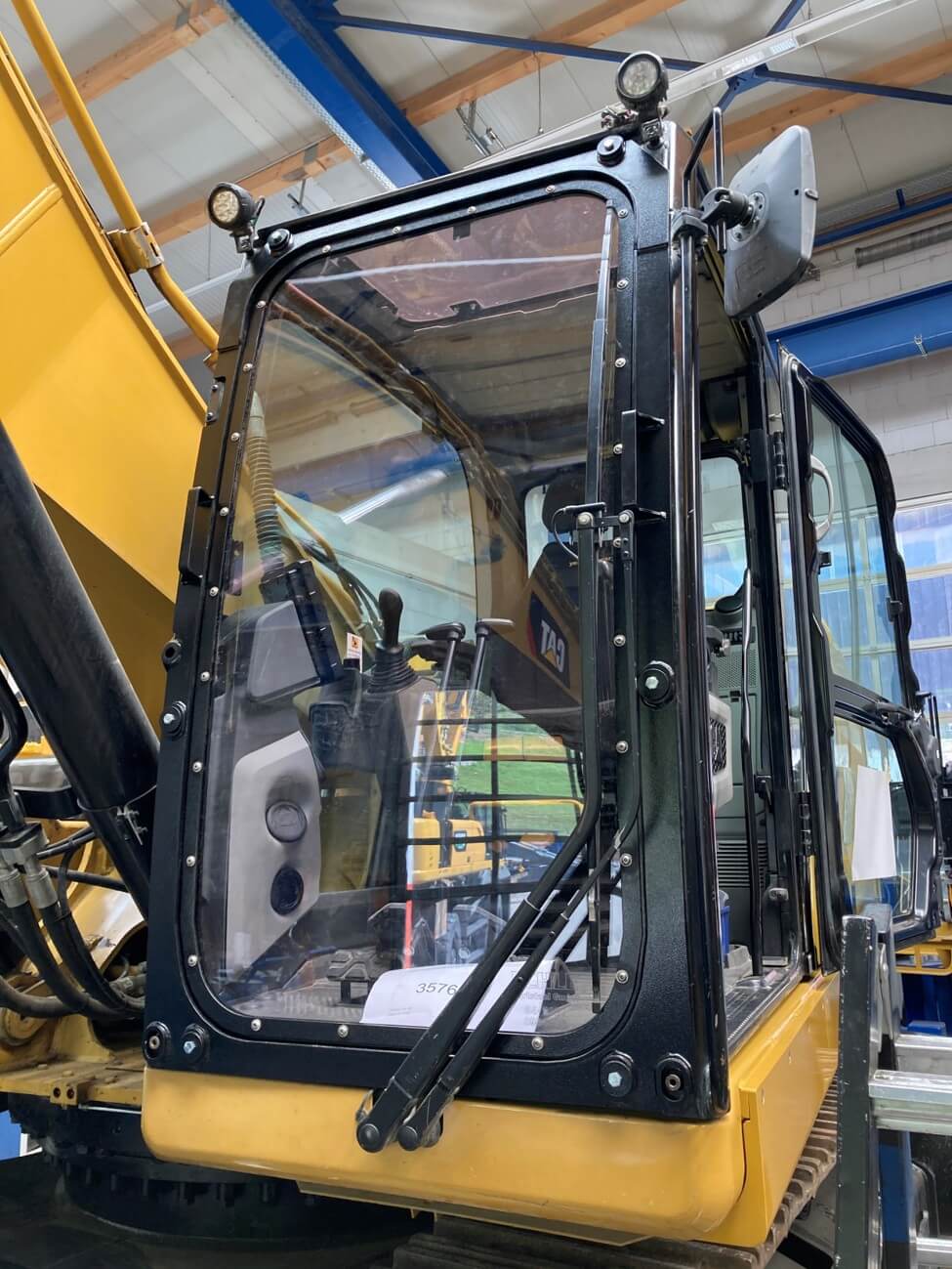
By default, excavators are usually equipped with glass panes with a thickness of 5–6 mm. These comply with the UN ECE R43 regulation, which additionally meets the requirements of the DIN EN 474-1: 2023-02 standard “Earth-moving machinery – Safety – Part 1: General requirements”. This represents the normative safety standard required by law for the operation of the machinery.
Enhanced Protection through Tempered and Laminated Glass
When the demands on the construction site increase, the standard setup is often no longer sufficient. For a significant boost in safety, specialized types of glass are utilized:
- Tempered Safety Glass: Increases durability and, in the event of breakage, shatters into harmless, blunt, small pieces.
- Laminated Safety Glass: The high-end solution for maximum safety. Thanks to an integrated specialized interlayer film, shards are held in place if a breakage occurs. Laminated safety glass forms the foundation for what is colloquially known as ‘bulletproof glass’ – engineered for high demands regarding impact, ballistic, or blast resistance.
- Polycarbonate: Indispensable in sectors such as forestry to protect the operator from penetrating objects, such as chain shot.
Safety glass for construction machinery – We offer the following resistance classes:
The resistance class indicates how much resistance the glass offers against mechanical impact.
| Resistance class | Description | |
|---|---|---|
 |
Tempered safety glass according to DIN EN 1215 |
Basic safety: If broken, the glass shatters into small pieces with blunt edges, thereby reducing the risk of injury. |
 |
P1A – P5A Resistance to manual attack (anti-bandit glazing) according to DIN EN 356 |
A 4.11-kg metal ball is dropped onto the glass from defined heights. Drop heights range from 1.5 to 9 meters. |
 |
P6B – P8B Resistance to manual attack (axe resistance / anti-burglar glazing) according to DIN EN 356 |
A mechanically driven axe strikes the glass to create a 400 x 400 mm opening. 30 to over 70 axe strikes. |
 |
BR1 – BR4 Protection against handguns and rifles (BR = Bullet Resistant) according to DIN EN 1063 |
Protection against handguns (e.g., .22 LR, 9 mm Parabellum, .357 Magnum, .44 Rem. Mag.
Suffix NS (e.g., BR4NS) = No Splintering. No splintering—maximum safety for people directly behind the glass. |
 |
BR5 – BR7 Protection against handguns and rifles (BR = Bullet Resistant) according to DIN EN 1063 |
Protection against rifles (e.g., 5.56 x 45 mm or 7.62 x 51 mm AP / armor-piercing) |
 |
ER1 – ER4 Blast protection Explosion-resistant glazing (Blast-resistant) according to DIN EN 13541 |
Protects against the effects of blast waves and reduces the risk of penetration and spall. |
 |
Certification according to ISO 21876 |
Chain shot protection Utilizing composite polycarbonate screens in practice. |
Challenges in Retrofitting Safety Glass Panels – What Can Be Retrofitted, and How?
Depending on the cabin shape and type of window, cabin windows can be retrofitted either directly or only with the aid of a support structure. The type of glass and the specific characteristics of the machine, such as the cabin shape, are particularly important factors in this regard.
You can choose from the following auxiliary structures:
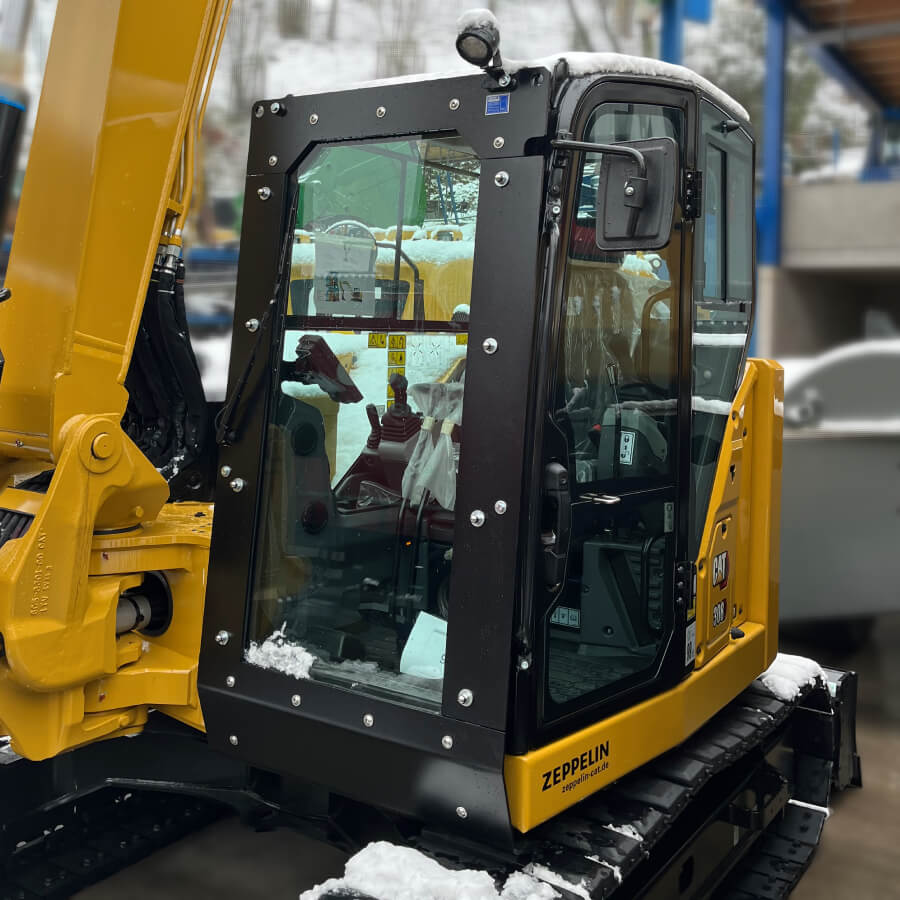
The front frame:
The front frame, including the safety glass pane, is easily mounted to the existing mounting points on the front of the cabin. Thanks to this design, the frame can be removed at any time without leaving any residue. Optionally, the system can be equipped with an additional windshield wiper on the front frame.
The Insert Frame:
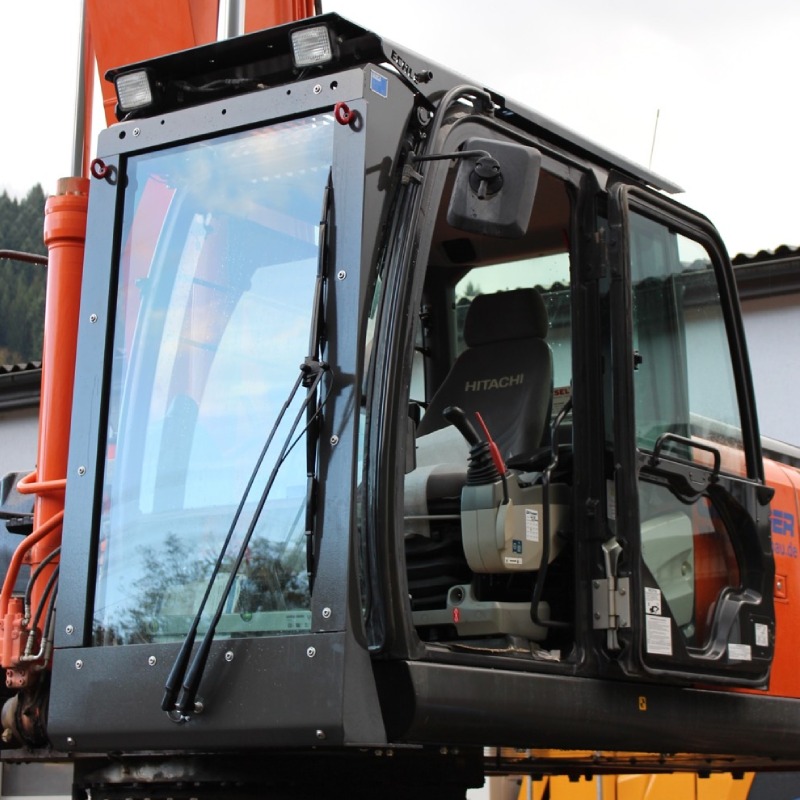
Unlike the front frame, the insert frame—including the safety glass—is screwed directly to the front of the cab without any spacing and sealed in place. Since this replaces the original windshield, only a single wiper system is required. Because of the rigid connection to the cab, removal is consequently more difficult, and the windshield can no longer be opened.
What are the requirements set forth in standards or guidelines?
Forestry Machinery:
The glazing of forestry machinery serves to protect the operator from the primary hazards encountered during operation:
- Protection Against Intrusion (Operator Protective Structures (OPS) according to ISO 8084):
The operator must be protected from hazards caused by whipping saplings, branches, and snapped winch cables. This can be achieved, for example, using polycarbonate or comparable glazing. This protection must be implemented in accordance with ISO 8084. - Protection Against Chain Shot (Certified Screen/Window according to ISO 21876):
In the event of a chain breakage, parts can fly toward the cab at projectile speed. Specialized glazing is mandatory here to safely stop these impacts. For this purpose, we install polycarbonate windows with ISO 21876 certification into the cab using a frame.
Consequently, polycarbonate windows are the ideal choice for forestry machinery, as they offer reliable protection against the two main hazards: intrusion of foreign objects and chain shot.
Ordnance Clearance and Explosive Ordnance Disposal (EOD) Surveying:
Our baseline standard aligns with the specifications of DGUV-I 201-027 (formerly BGI 833), which serves as the “Instruction manual for risk assessment and definition of protective measures during ordnance clearance”.
1. Minimum Standard (up to 100 g Net Explosive Mass (NEM) & frontal impact)
If ordnance is expected only from the front and with an explosive force of up to 100 g net explosive mass, the following requirements apply as a baseline:
- Front Glazing: Security glazing of resistance class BR 6 according to DIN EN 1063 (bullet-resistant) or ER 4 according to DIN EN 13541 (explosion-resistant).
- Cab Floor: Reinforced cab floor with a minimum protective effectiveness of 12 mm steel featuring a minimum yield strength of S235JR according to DIN EN 10025-2.
2. Extended Protection
Additional protective measures on the sides of the cab are required if:
- Multiple machines are operating simultaneously (mutual endangerment).
- The direction of the explosion’s impact cannot be clearly restricted to the front.
3. Increased Risk
In the event of greater hazards posed by ordnance exceeding 100 g NEM or other heavy debris/interfering objects, the minimum standard is insufficient. In these cases, customized, advanced protective measures must be implemented.